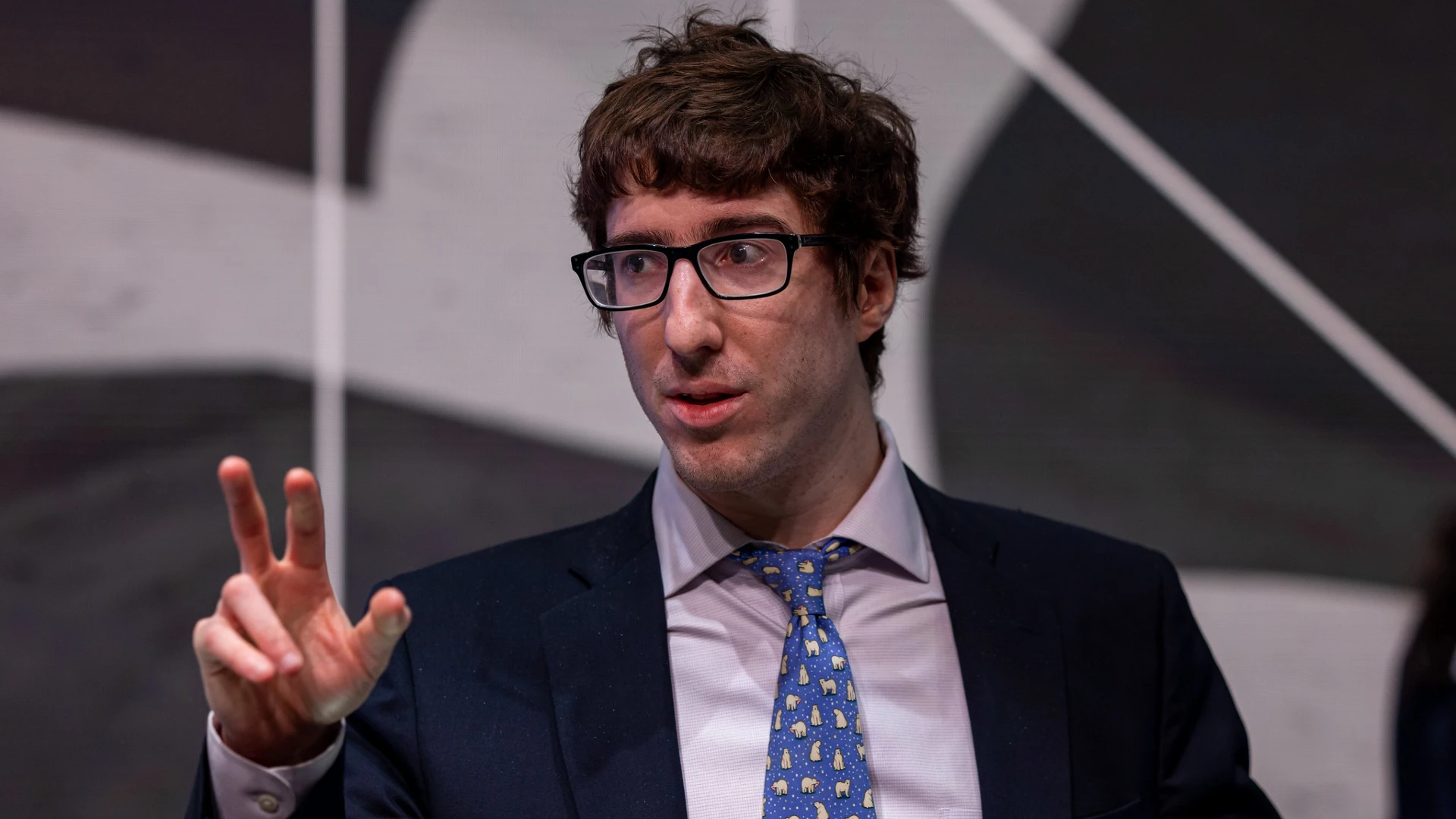
MarkZ: “One of the goals was getting from 2025 LTA as close as we can back to 2024 LCS.”
Q: For the first time in years, I’m only feeling excited by an LCS announcement — all good news. Are you feeling that hype?
MarkZ: Yeah, I think anytime we have an announcement, even when it’s supposed to be mostly good news, you’re hopeful it goes over well.
So, to have a pretty much overwhelmingly positive response to it, we’re very happy about. I do think — not to rain on our own parade — but we did flag that like, “Hey, this will result in a couple more show days in the Face-Off studio.” But, after two years of this, we haven’t seen like serious complaints from fans about it. No real issues.
Obviously, it’s not the ideal setup, but I think most people are comfortable with it now. […]
If you include the America’s Cup, there’s something like 11 more show days overall [than 2025]. And it’s just that most of those are in the Face-Off stage.
Q: Is the America’s Cup all Face-Off then?
MarkZ: No, so that’s actually in Brazil. Much like we had LTA Split 1 Playoffs in Brazil, we actually have this counting the same way; there’s a handful of days in Brazil. And then the 11 [new] days are all here in Los Angeles — and most of those are Face-Off.
Q: So it has an audience in Brazil?
MarkZ: Yes. I’d have to double check, but I’m almost positive that’s true.
Q: The bootcamp reward is really unique; it’s a cool way to ensure teams, players, and fans can be excited by a prize.
MarkZ: I’m glad to hear it. […] We were trying to figure out what we could do, because I do think it’s important for these out-of-circuit events to have some carrot at the end of the stick. Otherwise, some teams don’t necessarily always see the value in going versus resting or recuperating or whatever — even though I’m of the opinion you should always be looking for more competition.
So we did want to have some kind of reward, and we know that teams often boot camp anyways — so if you weren’t gonna go, then here’s a way to go. And if you were gonna go, now it’s just kind of off your books in a way. It’s Riot-expensed. It seemed kind of a easy win that we think has a tangible reward, hopefully, for teams improving across the year.
Q: How much did the team consider bringing back the 10 team league?
MarkZ: It was something that we are always talking about, but it wasn’t heavily considered. 2024 LCS, I think is when we initially moved to eight teams — I have to double check that.
[Editor’s note: This is true — it was finalized in an owner’s meeting after the 2023 season]
One of the goals was getting from 2025 LTA as close as we can back to 2024 LCS; to get back to something that [fans] were excited about.
Obviously, there’s still changes. We’re still representing Latin America now as well, there’s still three splits, there’s still some of these residency changes and stuff like that.
It’s about getting close to what fans remembered in 2024 and what they loved about that year.
Getting 10 teams is always something I think a lot of fans like the idea of, but it didn’t feel as necessary as getting […] slots back in our own path to international.
At the end of the day, it always comes down to making sure that we’re financially supporting the teams as best we can through the GRP model — and that is a global revenue pool. Any time you add teams to that system, it’s going to cause a further dilution. That’s ultimately one of the things that we’re paying the most attention to when [examining whether] it’s the right time to increase teams in the LCS — as well as a couple other factors. But that’s one of the main ones.
Q: With the LEC’s 12 team format, the LCS’s 8 teams in Split 1 will naturally get compared directly to it — were you aware of their experiment as you designed the LCS’s look for 2026?
MarkZ: We did have visibility. We do a pretty good job, I’d say, as a company, of giving awareness to what’s going on in other regions and departments. So we had visibility on it, and it’s something that’s interesting, I think.
One of the things that’s cool about the League of Legends ecosystem is that there is this level of autonomy within each region to try things out. So we debuted [playing on the] live patch — and then that got adopted by the whole world.
Korea is also trying coach comms, and so is the LCP. We haven’t picked that up yet. There’s some structural changes here with including Tier two teams directly into the competition that LEC has done.
You said there’s 12 teams, yes, but there’s not 12 partner teams — so there’s this level of flexibility in your format with, “Who are you going to invite to participate?” And we also had that last year when we debuted the guest system in Promotion/Relegation, which is something that fans have been wanting for a long time.
Other regions didn’t necessarily have that — some did, some didn’t. So there is this flexibility; an ability to pick things up depending on what’s going well in the ecosystem.
We’re definitely going to be watching the reception to the LEC Versus format — and if there is this huge desire to have more open tournaments that fuse Tier 1 and Tier 2 like that, it’s something we can definitely explore, I think.
Q: Many fans and pundits have asked for more Guest slot teams, which would allow teams like DSG to build long-term projects and stabilize, and increase the number of games. Thoughts?
MarkZ: Sort of. I think there’s a number of assumptions that are being made that I would disagree with — without getting into much of the weeds. And so, if you add a bunch of teams, but they’re also in a guest slot way that, and you’re worried about this poaching mechanism or the ability. […]
And I think, I don’t know if adding more solves that directly just because that could happen to then three teams or two teams unless you’re [doing] a lot more.
Q: It may not be a problem if only the lowest team can be relegated — but still, sounds like Riot is still open to making changes, so that’s nice.
MarkZ: Yeah, I mean, obviously we’re open to [changing things]. We’ve changed a lot.
Q: A big loss over time for the LCS has been the total number of broadcast hours, which seem liable to remain lower this year. Have you considered ways to increase total games, and broadcast times?
MarkZ: Yeah, definitely. I think there’s an important balance to strike between too much and too little. That way, fans can feel like they’re connected to the league and watching and know what’s going on without going too slim — [otherwise] suddenly people are wanting more. You want people to be satisfied with it.
I think that was definitely something we saw last year a little bit with some of the shorter formats. Like Split 1 last year was 9 days, if I remember correctly. I think it’s 16 now. I’d have to double check the math.
But yes, we’re making sure that we have longer formats and enough time.
And also, for the players competing, they want to have full formats. In Split 3, even [though] the number of show days was decent, we were eliminating teams really quickly. And so if you were a fan of a certain team or player, you might not have gotten to watch them very much in summer before their year was over.
The return to the round robin play also gives the players more time to ramp up across the split and [allow] these storylines to take place before they’re being knocked out. So I there’s a healthy balance of having this for fans to watch and feel better about.
I think some of the format changes can affect broadcast length, like you said. Bo3s [are] just more variable because four games, you can get through it faster, but you can also get six game days, which are pretty long in comparison.
Q: That’s why Pick & Play felt brutal, right? It happened to be all stomps, and LCS ended ultra-quickly every day.
MarkZ: Yeah, there was definitely some fast days. It was one of those… an overcooked, potentially, format. We have no problems talking about that. There are some cool things that think would be worth discussing again, but not in the way that it was implemented and how it played out. [We’d have to be] safeguarding against some of the things that went wrong if it was ever used again.
Q: It seemed like the worst possible outcome — like the smallest chance for the least entertaining result.
MarkZ: Two things. One, I think it was Week 2 when we got griefed by, was it LYON or 100 Thieves picking someone that we just wouldn’t have expected? Someone picked [a team] you wouldn’t have thought they would pick. […]
But in theory, [you’d want] your top two teams forced to play each other and, through most of our simulations as we ran through this format, it was very highly likely that C9 and FlyQuest will be playing Week 2, or — if not — guaranteed in Week 3.
Then shenanigans happened. People just started losing games that they weren’t supposed to lose, and that got really weird. I think it’s interesting in some ways. But at the same time, if your format can fall victim to that, maybe it wasn’t a great format in first place.
That was one of the areas where I think going back to something a little simpler, especially now that we have the time to run it [was best for 2026].
We were trying to figure out a way to have the system work within the constraints of needing to get to a cross conference stage and all these different things.
Q: This may be outside of your purview to answer, but how much do broadcast hours and Average Minute Audience affect GRP allocation? There’s a concern, depending on how it works, that leagues may be incentivized to broadcast less to minimize costs — and that we may not see a return to longer formats and broadcasts.
MarkZ: Yeah, think I’d have to ask how much visibility is given publicly around the GRP’s exact mechanisms. I can try and get a small follow-up on that. […]
It’s a global decision, so that’d be more of a Greeley question if you’re curious about the mechanisms of the GRP.
I’d say that your concerns, at least as I can answer them here, are nothing to be worried about. That level of thinking isn’t being factored into decision-making, and doesn’t have any negative consequences.
Q: Do you have a message to fans that may be apprehensive about the return of the LCS brand — the fans looking for a reason to get invested again?
MarkZ: I think we’ve had a very positive reception to most of the announcements coming from the end of last year. Obviously, there’s a degree of understandable cynicism around the rollback and fans who are maybe a little tepid about jumping back in. But since we’ve revealed the format [and] some of the initiatives this year, we’ve seen that fans are hopefully optimistic.
I think it’s now just about delivering on that. As we continue to have a good year and have a good product, hopefully more and more fans come back and really find themselves reinvested in the league and [get] that word of mouth going again.
We’ve seen a little bit anecdotally —online and comment sections — saying that they’re excited for the first time in a long time. Now, I think it’s about continuing that momentum and not hitting a roadblock somehow.
Header Image Credit: Riot Games